Core Web Vitals Explained: Why Website Speed Is a Detroit SEO Ranking Factor
A clear, E-E-A-T-focused breakdown of Google Core Web Vitals — LCP, INP, and CLS — and why website speed directly affects Detroit search rankings and conversions.
Author
Priya Nandakumar
Category
Web Design & User Experience
Read Time
10 min read
Published
August 20, 2026
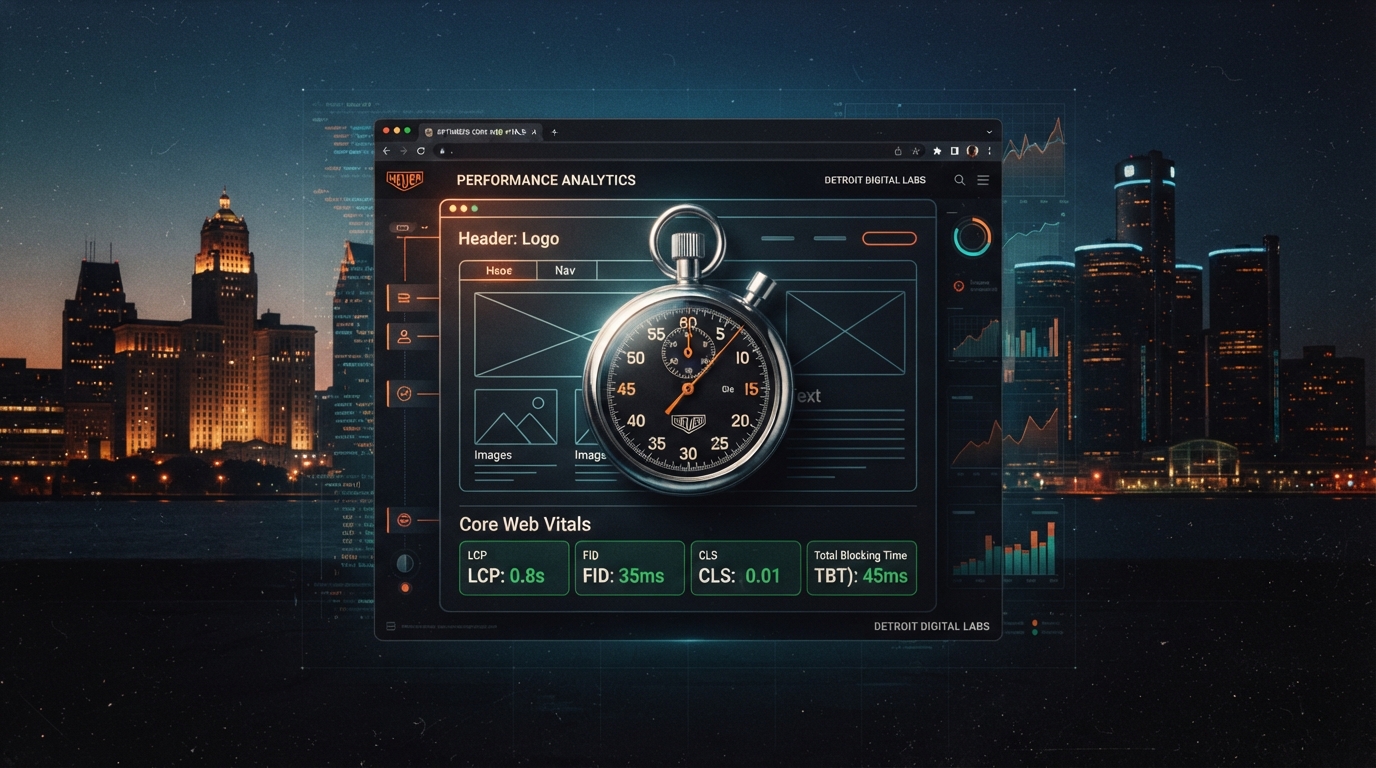
When a Detroit customer clicks your Google result and waits four seconds for the page to render, most will hit the back button before it finishes. Google knows this, which is why Core Web Vitals — a set of metrics measuring real user experience — are now part of the search ranking algorithm. This guide explains the three Core Web Vitals, what each measures, and how Metro Detroit businesses can improve them to rank higher and convert better.
Key Takeaways
- 01Largest Contentful Paint (LCP) measures loading performance — aim for under 2.5 seconds.
- 02Interaction to Next Paint (INP) measures responsiveness — aim for under 200 milliseconds.
- 03Cumulative Layout Shift (CLS) measures visual stability — aim for under 0.1.
- 04Core Web Vitals use real-user data from the Chrome UX Report, not lab simulations alone.
- 05Improving these metrics boosts both search rankings and conversion rates.
Largest Contentful Paint (LCP): Loading Speed
LCP measures when the largest visible element on the screen finishes rendering — usually a hero image or a headline. A slow LCP means visitors stare at a blank or partially loaded page. Google considers LCP over 4 seconds poor.
To improve LCP, optimize and preload your hero image, use a CDN, and avoid render-blocking scripts. For Detroit e-commerce sites, a fast LCP on product pages directly correlates with add-to-cart rates.
Art commerce platforms like Karma by Design prioritize fast-loading product imagery so collectors browsing on mobile are not kept waiting.
Interaction to Next Paint (INP): Responsiveness
INP replaced First Input Delay in 2024 as the responsiveness metric. It measures the time between a user interaction (a tap, click, or key press) and the next frame the browser paints. A high INP means the site feels sluggish when tapped.
Heavy JavaScript, third-party scripts, and long tasks on the main thread cause poor INP. Break up long tasks, defer non-essential scripts, and use web workers for complex processing.
CRM and automation dashboards like Studio Escrow are built to keep INP low even with real-time data, ensuring users never feel lag when managing leads.
“A fast-loading page that feels unresponsive when tapped still fails Core Web Vitals.”
Cumulative Layout Shift (CLS): Visual Stability
CLS measures how much the page layout shifts as it loads. If text jumps when an image finally renders, or a button moves when an ad loads, that is layout shift. Google considers a CLS over 0.1 poor.
Prevent shifts by setting width and height dimensions on images and embeds, reserving space for ads, and avoiding dynamically injected content above existing content. These small fixes dramatically improve CLS.
Real-User Data vs. Lab Data
Core Web Vitals are scored using real-user data from the Chrome UX Report — actual visits from real devices on real connections. Lab tools like Lighthouse simulate conditions but do not replace field data.
Check your field data in Google Search Console under the Core Web Vitals report. It shows how your site performs for real visitors, grouped by URL and device. Prioritize the pages with the most traffic and the worst scores.
How Speed Affects Detroit Local SEO
Core Web Vitals are a tiebreaker ranking signal. When two Detroit businesses have similar content and authority, the faster site wins. For competitive local keywords — 'Detroit marketing agency,' 'Rochester Hills med spa' — speed can be the difference between page one and page two.
Speed also affects conversion. A one-second improvement in load time can increase conversions significantly. For local businesses where a single lead is worth hundreds of dollars, the ROI of speed optimization is direct.
Agencies like House of Karma build performance optimization into their web design process, treating Core Web Vitals as a baseline rather than an afterthought.
The Bottom Line
Core Web Vitals translate the abstract idea of 'a fast website' into measurable, optimizable metrics. For Detroit businesses competing in local search, improving LCP, INP, and CLS is one of the highest-ROI investments you can make — it lifts rankings, reduces bounce, and increases conversions simultaneously.
Sources & References
- [1]Google Search Central — Core Web Vitals Overview
Official Google documentation on the three Core Web Vitals metrics.
- [2]web.dev — Interaction to Next Paint (INP)
Detailed technical explanation of the INP metric that replaced FID.
- [3]Chrome UX Report
Real-user experience data powering Core Web Vitals scores.