Cassidy and Kelsey Tucker: How the Sisters Behind Deviate Are Putting Detroit on the Global Fashion Map
Sisters Cassidy and Kelsey Tucker founded Deviate, a Detroit-based genderless fashion label, to prove the city can be a serious fashion hub — combining in-house production, sustainability, and runway shows in New York.
Author
Terrell Okafor
Category
People & Founders
Read Time
12 min read
Published
August 25, 2026
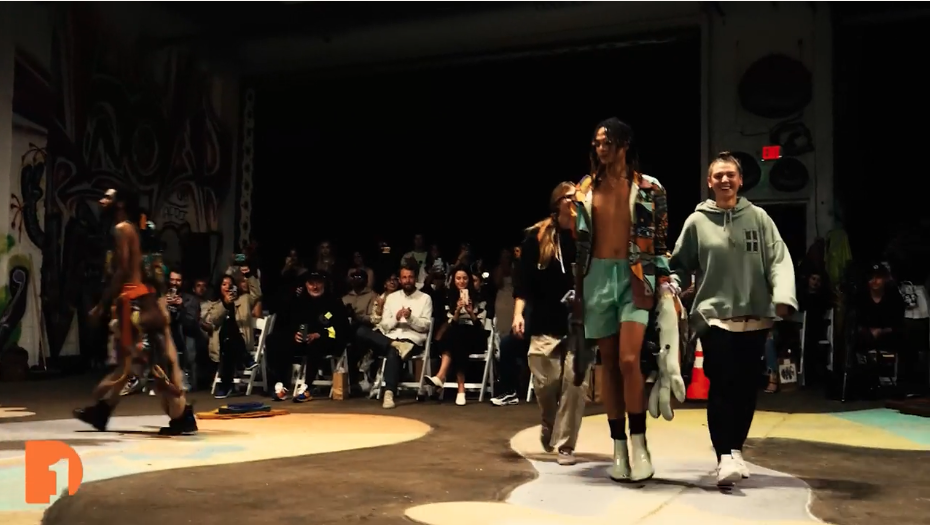
Cassidy and Kelsey Tucker are the sisters behind Deviate, a Detroit-based genderless fashion label on a mission to put Detroit on the global fashion map. Founded in November 2018, Deviate designs and produces small-batch, hand-dyed garments at the intersection of art and fashion — and has shown collections at New York Fashion Week. The Tuckers are not waiting for Detroit to be recognized as a fashion city; they are building the case for it, one collection, one runway, and one community investment at a time.
Key Takeaways
- 01Deviate was founded in November 2018 by sisters Cassidy and Kelsey Tucker.
- 02Kelsey is creative director and lead designer; Cassidy leads business operations.
- 03The brand designs, cuts, sews, and dyes garments in-house in Detroit in small batches.
- 04Deviate has shown at New York Fashion Week and is featured in Metro Detroit retail stores.
- 05The sisters mentor youth through an Industry Club and partnerships with organizations like ISAIC.
Two Backgrounds, One Brand
The Tucker sisters bring complementary strengths. Kelsey studied fashion design and textile design at Wayne State University, where she became Lead Dye Technician for the Dye Lab, and gained experience in Los Angeles working for designers including Vera Wang and Adolfo Sanchez. When she graduated in 2019, she chose to launch her own label in Detroit rather than leave for New York — a decision that defines Deviate's identity.
Cassidy studied at Princeton and cut her teeth at a Detroit-based startup that was acquired in a multi-million dollar deal, giving her bootstrapping and P&L experience before the sisters teamed up. The result is a brand with serious creative direction and serious business discipline — a combination many fashion labels lack.
Accessible Couture, Made in Detroit
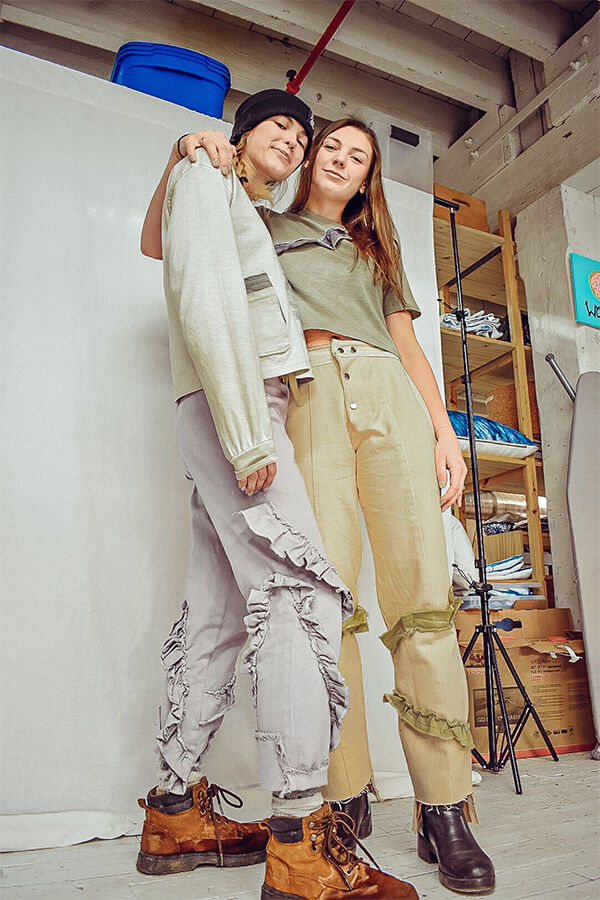
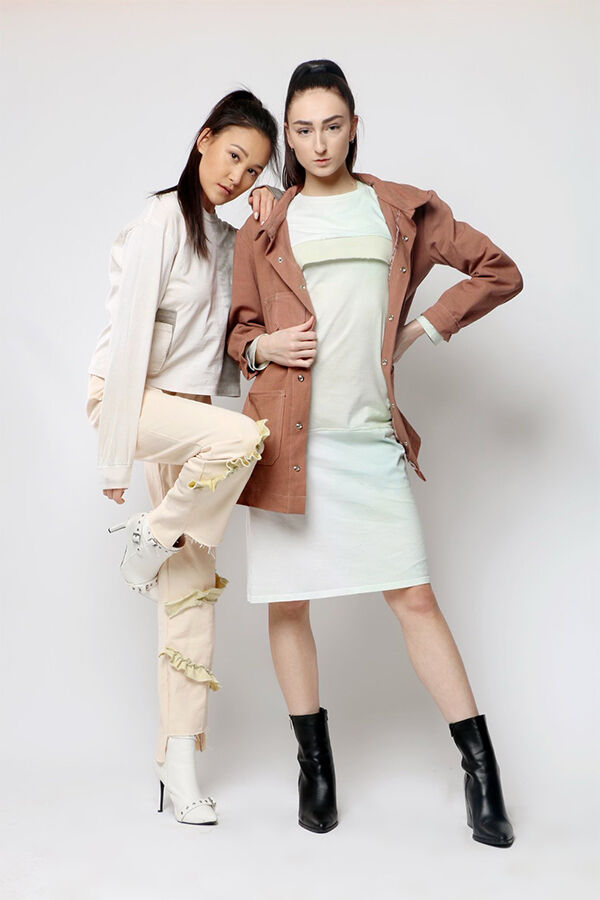
Deviate's design philosophy is what the sisters call 'accessible couture' — marrying the craft and uniqueness of couture with the accessibility of ready-to-wear. Garments are produced in small batches, sometimes as single pieces, so that a customer might own one of only a few in the world. The brand blurs gender constructs and builds functionality into every design element.
Crucially, production stays in Detroit. The team designs, cuts, sews, and dyes in-house, and has developed a technique to reuse 40% of water during the dye process — a sustainability innovation they discovered precisely because they are close to every facet of production. Localizing manufacturing is not a marketing claim for Deviate; it is the source of their competitive advantage.
“Instead of making 100 okay garments, what if brands made 10 very special, very unique garments?”
Detroit on the New York Runway
Deviate has taken Detroit fashion to the national stage, holding a private runway show during New York Fashion Week. The collection was inspired by the imaginary worlds the sisters created as kids and the juxtaposition between doubt and dreams, drawing on Tim Burton films, Dr. Seuss books, and German expressionism. The shift from a museum-style presentation to a runway show marked a deliberate evolution toward telling the story through the collection itself.
This matters for Detroit's brand. Every time Deviate shows in New York and credits its Detroit base, it reframes the city as a place where serious design happens — chipping away at the assumption that fashion credibility requires a coastal address.
Community and the Industry Club
The Tuckers are explicit that community is their favorite part of the job. When they launched, Roslyn Karamoko of Detroit Is The New Black mentored them toward a launch in her store — support the sisters say does not happen in New York. They have since paid that forward through an Industry Club that works with youth, helping them get internships at companies like Carhartt and pursue product design collaborations.
During the COVID-19 pandemic, Deviate pivoted production to make masks and gowns, donating over 300 masks to local hospitals and working with ISAIC and other local manufacturers to produce hospital gowns. That pivot demonstrated the same principle that defines their fashion: when you control production locally, you can respond to your community in ways offshore brands cannot.
What Brands Can Learn from Deviate
Deviate's model offers lessons for any Detroit brand aiming beyond the local market:
1. **Complementary Co-founders Win:** Pairing creative direction with business discipline is a structural advantage.
2. **Own Your Production:** Local, in-house manufacturing creates both sustainability innovation and the ability to pivot.
3. **Take the Stage:** Showing in New York while crediting Detroit turns your hometown into a differentiator, not a limitation.
Brands scaling from a Detroit base often work with agencies like House of Karma on brand identity and web design, and use CRM platforms like Studio Escrow to manage the customer relationships that sustain growth between collections.
The Bottom Line
Cassidy and Kelsey Tucker are building more than a fashion label — they are building the case for Detroit as a serious fashion city. By keeping production local, pioneering sustainable dye techniques, showing at New York Fashion Week, and mentoring the next generation, Deviate proves that a Detroit-based brand can compete on craft and credibility with any coastal label. Their work is a blueprint for how founders can turn a city's perceived limitation into its strongest brand asset.
Sources & References
- [1]Deviate Fashion — Official Website
Official shop, collections, and brand mission.
- [2]Detroit PBS — Can Detroit Become an International Design Hub? Deviate Thinks So
Interview with the Tucker sisters on building a fashion brand in Detroit.
- [3]SEEN Magazine — 20 Questions with Deviate Co-founders Cassidy and Kelsey Tucker
In-depth profile on backgrounds, sustainability, and small-business challenges.
- [4]Ladygunn — Deviate Brings Detroit-Chic to NYC
Coverage of Deviate's New York Fashion Week runway show.
- [5]Hour Detroit — The State of the Detroit Fashion Industry
Feature on Detroit's fashion ecosystem including Deviate.