The Detroit Bus Company: How Andy Didorosi Built a Brand Where Every Purchase Funds a Social Mission
Founded by Andy Didorosi in 2011, The Detroit Bus Company turned city tours and bus rentals into a social enterprise through its Ride for Ride model — every seat purchased funds a safe ride for a Detroit kid in need.
Author
Cassius Delgado
Category
Brand Spotlights & Cultural Identity
Read Time
11 min read
Published
May 4, 2025
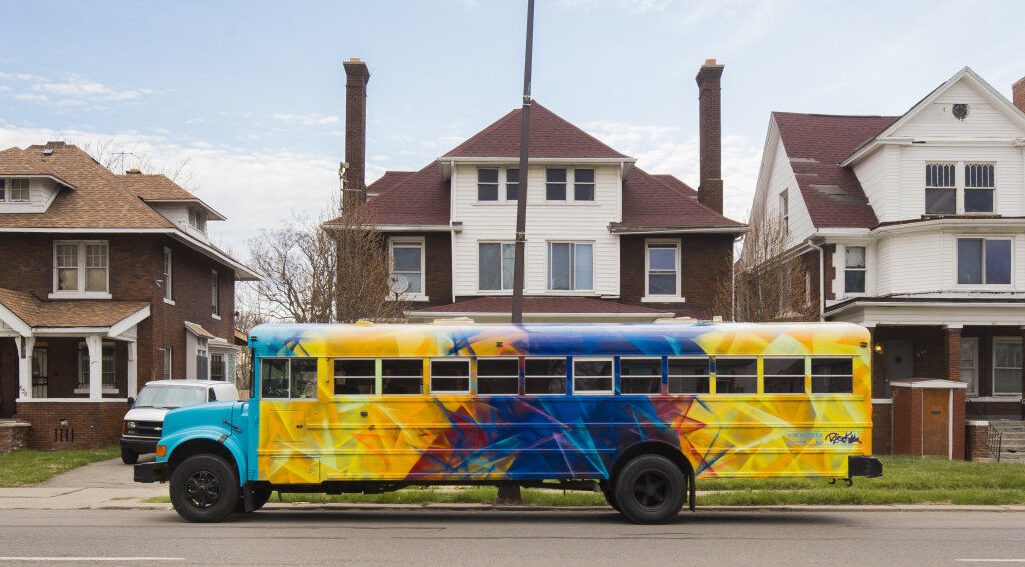
The Detroit Bus Company is a transportation and experiences brand founded by Andy Didorosi in 2011. What began with a single painted bus running a $5 route around Detroit evolved into a company offering city tours, art bus rentals, and a social mission called Ride for Ride — a model in which every seat purchased on a paid experience funds a safe ride to school or an after-school program for a Detroit kid in need. The brand is a rare example of a business where the social mission is not a marketing layer but the core commercial engine, making every customer transaction a dual-purpose act. Its growth from one bus to a 2.5-acre warehouse operation demonstrates how purpose, when engineered into the business model, can scale.
Key Takeaways
- 01The Detroit Bus Company was founded by Andy Didorosi in 2011 with a single painted bus running a $5 city route.
- 02Its Ride for Ride model means every seat purchased on a paid experience funds a safe ride for a Detroit kid in need.
- 03The company gave 5,711 free rides to Detroit students in 2012 with a single 24-seater bus.
- 04During the pandemic, Didorosi acquired a 55,000-square-foot abandoned factory on Detroit's west side to expand operations.
- 05The brand's art-painted buses function as moving brand assets, turning every vehicle into a billboard for the mission.
The Origin: One Bus, One Route, One Idea
In 2011, Andy Didorosi bought a bus, had an artist friend paint it, and started running a route around the city of Detroit where riders could travel as much as they wanted for $5. That was the founding act of The Detroit Bus Company. Before that, Didorosi had rented a workshop corner at 16 to work on cars, opened Paper Street — a small business incubator in Ferndale — at 22, and started a racing series called The Thunderdrome on an abandoned Detroit velodrome in 2010.
This founder history matters for the brand. Didorosi is not a transportation executive who discovered purpose; he is a serial entrepreneur whose brand emerged from a pattern of building things Detroit needed. That authenticity is the foundation of the Ride for Ride model. For more on how Detroit brands build identity around purpose, The Detroit Bus Company is a defining example.
“In 2011, I got the idea that Detroiters needed a better way to get around. I bought a bus, had an artist friend paint it up, and we hit the road.”
Ride for Ride: The Mission as the Business Model
The Ride for Ride model is the brand's defining innovation. With every seat purchased on a paid tour or rental, the company gives a Detroit kid in need a safe ride to school or an after-school program. In 2012, with a single 24-seater bus, the company gave 5,711 rides. The mission is not a CSR program layered onto a commercial operation — it is the reason the commercial operation exists.
This structure creates a marketing advantage that is nearly impossible to replicate. Every customer who buys a tour knows their purchase has a dual impact, which gives the brand a story worth sharing. The transaction itself becomes the marketing. For businesses studying how Detroit brands turn local identity into attention, Ride for Ride demonstrates that the most powerful brand stories are the ones embedded in the transaction, not added on top.
The Art Bus as a Moving Billboard
Every Detroit Bus Company vehicle is painted by artists, turning the fleet into a collection of moving murals. This is a branding decision with compounding returns: every bus on the road is a billboard, every tour is a mobile exhibition, and every rental carries the brand's visual identity into events across the city. The art is not decoration — it is distribution.
The lesson for Metro Detroit businesses is that brand assets can be embedded in the product itself. A painted bus is simultaneously a vehicle, a marketing channel, and a cultural artifact. Businesses that find ways to make their physical presence carry the brand — whether through vehicles, packaging, uniforms, or storefronts — create distribution that paid media cannot replicate.
“With every seat you purchase on one of our experiences, we will give a Detroit kid in need of a safe ride to school or after-school program. Ride for ride.”
Scaling Through Crisis
During the pandemic, when most businesses contracted, Didorosi made a counterintuitive move: he purchased a 55,000-square-foot abandoned factory on Detroit's west side — 2.5 acres of space. This acquisition was not just real estate; it was infrastructure for a brand whose experiences require vehicles, maintenance, and staging space. The expansion positioned The Detroit Bus Company to scale tours, rentals, and community programming once demand returned.
Scaling a purpose-driven brand requires the same systems as any growing business: operations, marketing, and customer relationship management. For businesses building complete growth systems, the combination of brand strategy, CRM, and automation — the kind House of Karma builds — is what allows a mission-driven operation to grow without losing the personal connection that made it work in the first place.
Frequently Asked Questions About The Detroit Bus Company
**Who founded The Detroit Bus Company?** The Detroit Bus Company was founded by Detroit entrepreneur Andy Didorosi in 2011.
**What is the Ride for Ride program?** Ride for Ride is the company's social mission model: every seat purchased on a paid tour or rental funds a safe ride to school or an after-school program for a Detroit kid in need.
**What services does The Detroit Bus Company offer?** The company offers Detroit city tours, art bus rentals for events, and the Ride for Ride community program.
**How many free rides has the company given?** In 2012 alone, with a single 24-seater bus, the company gave 5,711 free rides to Detroit students.
**Where can I follow The Detroit Bus Company?** You can find founder Andy Didorosi on Twitter and Instagram at @ThatDetroitAndy, and explore tours and rentals at thedetroitbus.com.
The Bottom Line
The Detroit Bus Company is proof that a brand can be built around a social mission without sacrificing commercial viability — when the mission is the business model. Ride for Ride turns every transaction into a dual-purpose act, the art-painted fleet turns every vehicle into distribution, and the founder's authentic history gives the brand a story that cannot be fabricated. For Detroit businesses seeking to embed purpose into their growth, the lesson is that the mission must be structural, not decorative. Explore tours and rentals at thedetroitbus.com and read more about how Detroit brands build identity around purpose.
Sources & References
- [1]The Detroit Bus Company — Official Website
Official tours, rentals, and Ride for Ride program.
- [2]The Detroit Bus Company — Andy Didorosi's Story
Founder's firsthand account of the company's origin.
- [3]Detroitisit — Detroit Bus Company Got Imaginative During the Pandemic
Reporting on Didorosi's expansion and warehouse acquisition.